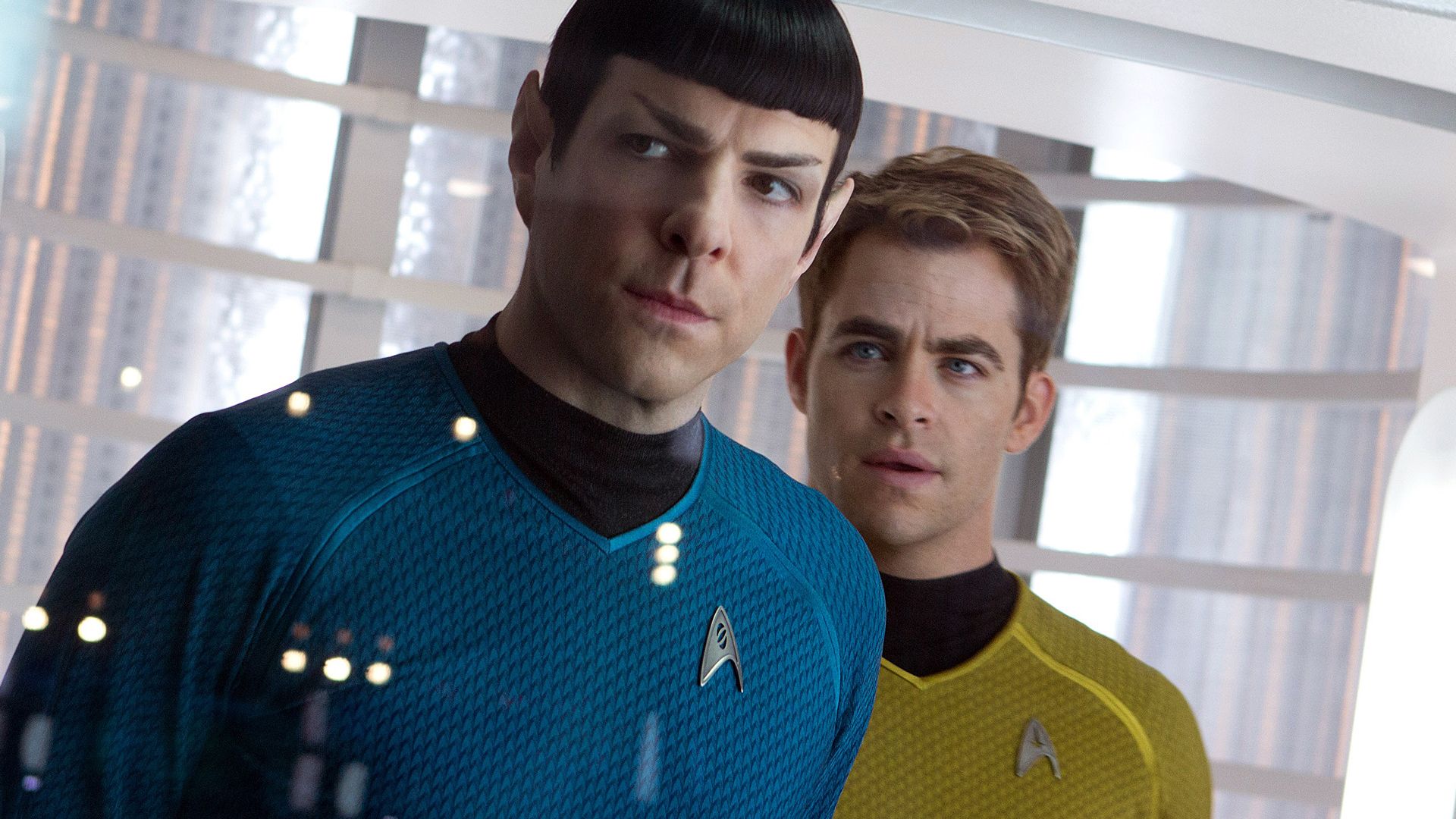
スタートレックは、SF の中で最も広大な宇宙の 1 つを誇ります。最新シリーズのスタートレック: 宇宙艦隊アカデミーでは、このシリーズには 14 本の映画と 13 本のテレビ番組が含まれており、それに加えて、豊富な定評のある漫画本や小説も含まれています。
これらの変更により、特に異なるタイムラインや代替現実の導入により、いくつかの不一致が必ず発生します。ファンは、ザ・ネクスト・ジェネレーション でデータが時折短縮形を使用するなど、小さな矛盾を見逃すかもしれませんが、その他の矛盾は明確さよりも混乱を引き起こすほど重大です。
スタートレックにおけるマイルズ・オブライエンの階級の変化: TNG とディープ・スペース・ナイン
コルム・ミーニーはスタートレック:ディープ・スペース・ ナインの主人公になる前にスタートレック:次世代に初めて登場したマイルズ・オブライエンを演じました。 しかし、ザ・ネクスト・ジェネレーションでの彼の正確なランクは不明です。彼は少尉としてスタートし、同じシーズン内にすぐに中尉の階級の輸送部長に昇進しました。
We later learned that O’Brien was a warrant officer, not a Starfleet Academy graduate. His backstory remained inconsistent throughout The Next Generation and Deep Space Nine, with both his own statements and those of other characters often conflicting with his established rank and official records.
Tuvok Wearing the Wrong Insignia in Star Trek: Voyager
Tuvok, played by Tim Russ in Star Trek: Voyager, also had some inconsistencies with his uniform rank in a few episodes. Like Miles O’Brien, his insignia wasn’t always correct. As a highly valued and loyal officer under Captain Janeway, Tuvok played a critical role on the ship and repeatedly saved the lives of his crewmates during Voyager’s difficult journey back to Earth.
Tuvok initially appeared with the rank of lieutenant commander, despite actually being a lieutenant. This was fixed in the episode “Cathexis” (Season 1, Episode 13), and he wore the correct rank insignia for the remainder of the series.
The USS Enterprise Rarely Goes Where No Man Has Gone Before
While this plot point makes sense from a narrative perspective, it’s something fans have questioned for nearly six decades. The core mission of the show is to explore where no one has gone before, but the crew consistently encounters people – colonists, other Starfleet personnel, or even humans lost in space and time – rather than truly uncharted territory.
The crew’s five-year journey often keeps them close to Starbases 11 and 12, and help from Starfleet is usually just a short distance away. This feels strange, considering the Enterprise was intended to boldly explore the far reaches of the galaxy, not stay so near Federation territory.
The Mirror Universe in Star Trek: The Original Series
In Season 2, Episode 4, the show really dives into the idea of a multiverse. They showed us a parallel Earth inhabited by humans, and it was amazing – it looked exactly like the future from Star Trek! But it got me thinking… these humans were really aggressive and prejudiced, and it just didn’t seem believable that they could have built the kind of peaceful, advanced society we see in the Federation all by themselves.
It’s possible a society could become cruel and controlling like the Terran Empire, but it’s hard to believe almost everyone within it would be truly evil. The empire’s widespread use of murder, torture, and other terrible acts just isn’t very believable.
The Concept of Money Across the Star Trek Franchise
In the future world of Star Trek, known as the Federation, money is no longer needed because technology can create almost anything people want. Captain Picard explains this in detail in one episode. However, the show isn’t always consistent in portraying this cashless society.
Although the future depicted in Star Trek IV suggests money is obsolete, earlier episodes of The Original Series show Captain Kirk offering payment for items like dilithium. We also see characters like Dr. Crusher buying things and Picard making purchases during their shore leave on Risa. Similarly, throughout Deep Space Nine, Starfleet officers routinely pay Quark for his goods and services.
Despite what Starfleet captains say about money being outdated, it’s clearly still around in some form. It’s just unclear what that currency actually is or how people use it.
The Lack of Time Cops in the Kelvin Timeline
The 2009 Star Trek movie and its sequels use a revised timeline as their core idea. When characters like Nero and an older Spock go back in time, they change history, resulting in a new reality where we see familiar characters experiencing different events than those in the original series.
Although this idea fits the narrative, it overlooks a significant element of the Star Trek world. The Federation’s Department of Temporal Investigations, which first appeared in the DS9 episode “Trials and Tribble-ations” (Season 5, Episode 6), is responsible for maintaining the timeline and preventing alterations.
The story doesn’t mention the DTI, though we can assume it’s still around. According to established rules within the story’s universe, they should have gotten involved when the timeline was altered. While adding them would have likely ruined the plot or made it extremely brief, their absence feels like a mistake.
Khan Never Met Chekov in Star Trek: The Original Series
As a huge fan of classic sci-fi, I’ve always been fascinated by Khan Noonien Singh, played brilliantly by Ricardo Montalban. He’s one of the genetically engineered supermen from a time when that kind of thing wasn’t restricted. It’s amazing to think about the heights of intelligence and skill he represents, but honestly, I’ve always questioned how reliable his memories actually are. It adds another layer of mystery to his character, for me at least!
In Star Trek II: The Wrath of Khan, Captain Kirk famously tells Chekov he never forgets a face. However, this creates a continuity error because Chekov wasn’t a member of the crew when Khan first appeared in the Season 1 episode “Space Seed.” Chekov didn’t join the series until the second season, after Khan was already gone.
The creators of The Wrath of Khan admitted there was a mistake in the story’s timeline. Despite this, fans continue to come up with ideas explaining how Chekov and Khan could have known each other before. However, the story itself hasn’t offered any explanation for this connection.
Transwarp Beaming in the Kelvin Timeline
A debated part of the first Star Trek reboot film focused on Spock and the Prime Directive. Before this, Spock had always believed in and upheld the directive, which prevents interference with the natural course of other civilizations’ development.
In the 2009 movie, the character breaks the established rules of time travel, believing that because the timeline is already changed, he can act without consequences. For instance, he shares the plans for a futuristic technology – transwarp beaming – with a younger Scotty, who would eventually invent it himself. This decision puzzled many viewers, who wondered why this advanced technology wasn’t featured in later films.
Transwarp beaming is incredibly strong. Captain Kirk and Chief Engineer Scotty can instantly transport themselves onto the Enterprise, even when the ship is traveling at very high speeds towards Earth. This technology is so advanced it defies the normal rules of the universe.
Shows like Star Trek: The Next Generation established that teleporting onto a ship traveling at warp speed is generally impossible, and even if attempted, incredibly challenging. Although this new series takes place in a different timeline, the older Spock points out that Scotty invented this technology in the original timeline. This raises the question: if the technology existed, why wasn’t it ever commonly used?
The Changing of the Trill in Star Trek: Deep Space Nine
The Trill first appeared in the Star Trek: The Next Generation episode “The Host” (Season 4, Episode 23). They then became a regular part of the Deep Space Nine series, and Jadzia Dax (played by Terry Farrell), a Trill character, was a central figure in that show.
The Trill had evolved significantly over time. A key change involved transporter use: in The Next Generation, it was established that transporters could harm a Trill symbiont. However, in Deep Space Nine, Jadzia Dax is shown using transporters without any negative consequences.
In the Star Trek episode “The Host,” the Trill symbiont tried to maintain a romantic connection with Beverly Crusher even after transferring to a different host. However, later storylines established that this kind of behavior violates Trill cultural norms.
The Vulcan Mind Meld Logic in Star Trek: Strange New Worlds
In the Star Trek: The Original Series episode “Dagger of the Mind” (Season 1, Episode 9), Spock tells Scotty that he’s never before attempted a mind meld with a human. As he prepares to connect minds with Dr. Simon van Gelder, Spock clarifies that mind melding is a deeply personal Vulcan practice, and attempting it on a human is unusual and could be risky.
In Star Trek: Strange New Worlds, we see Spock at an earlier point in his life, and he frequently uses a mind-meld – a technique to share thoughts and memories. In Season 1, Episode 4, “Memento Mori,” he uses it with La’an Noonien-Singh (Christina Chong) to help her remember a traumatic event involving the Gorn. Later, in Season 3, Episode 10, “New Life and New Civilisations,” he mind-melds with James T. Kirk (Paul Wesley).
These mental connections happen before the events of The Original Series, which creates a problem. Spock later states he’d never shared a mind-meld with a human, but these earlier instances contradict that. This inconsistency hasn’t been explained in any of the shows or movies.
- JPY KRW 予想・見通し・の予想
- 「フロム」シーズン3の最終回でジル・グリーンに敬意を表
- USD JPY 予想・見通し・の予想
- CNY JPY 予想・見通し・の予想
- 『アウターバンクス』シーズン5ではJJの衝撃的な降板を受けてさらに悪党どもが殺されるのか?
- EUR JPY 予想・見通し・の予想
- BTC 予想・見通し・の予想. BTC 暗号通貨
- 『ザ・ケージ』シーズン 2 が Netflix 番組制作者から希望に満ちた最新情報を入手
- 『エミリー・イン・パリ』のソリターノは実在する場所ですか?シーズン4のイタリアのロケ地を解説
- リップがジェイク・ウィリアム・カシアーノに捧げられている理由: 実生活からのインスピレーションを説明
2026-01-24 23:15